
What is live CCTV monitoring for auto dealerships?
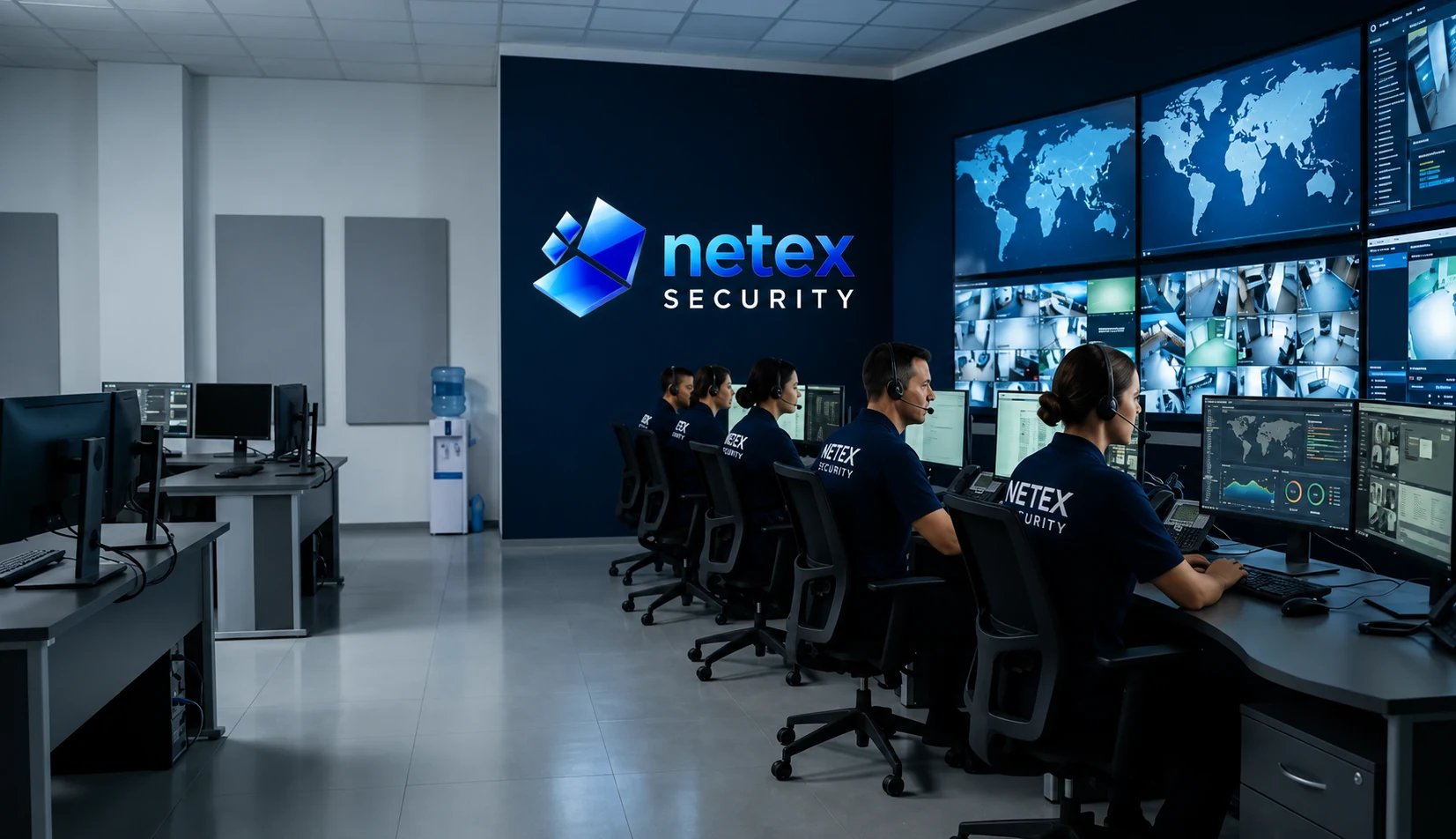
Live CCTV monitoring for auto dealerships means trained human operators observe camera feeds, assess suspicious activity, issue voice-down warnings where equipment is available, and escalate incidents under an agreed response plan. Unlike recording alone, it creates an opportunity to act while an incident is developing. For dealerships with outdoor inventory, customer vehicles and service areas, that distinction matters after closing. Netex Security provides 24/7 live human remote CCTV monitoring: your cameras record; we protect. The practical goal is to identify concerning behavior early and support an appropriate response, rather than rely only on footage reviewed after a loss.
Focus on the places where after-hours activity matters
A useful dealership monitoring plan starts with access routes and exposed assets, not simply the number of cameras installed. Review vehicle display rows, perimeter gates, pedestrian entrances, service-bay doors, parts storage access and customer-vehicle parking. Look for sightlines that let an operator distinguish someone walking past the property from someone entering a restricted area or moving between parked vehicles. Dense parking, tall vehicles, glare and poor lighting can obscure activity. Cameras should support observation of the behavior that matters, such as a person crouching beside a vehicle, testing doors or remaining near a closed service entrance.
How detection, voice-down warnings and escalation work together
Consider an after-hours scenario: a person enters the lot and repeatedly approaches vehicles away from any public walkway. A trained operator can assess the visible behavior against the dealership’s instructions. Where voice-down equipment is installed, the operator can warn that the area is monitored and instruct the person to leave. If activity continues or the situation meets an agreed escalation threshold, the operator follows the incident response procedure. This may involve contacting a designated dealership representative or emergency services when appropriate. The sequence is observation, assessment, intervention and escalation; it should not depend on staff improvising during an incident.
Check whether your camera setup supports an effective response
Before arranging monitoring, assess camera coverage, nighttime image quality, network reliability, remote access and any available speaker system. A recording system may capture an event without providing the view needed to understand it while it unfolds. Check whether operators can follow movement between zones and identify which entrance or vehicle row needs attention. Confirm how camera outages and unavailable feeds will be handled. Do not assume existing equipment is compatible without a review. If voice-down intervention is required, speaker coverage should reach the relevant areas clearly, and access to camera systems should use appropriate permissions and account controls.
Create clear rules for authorized visits and incident reporting
Not every after-hours visitor is an intruder. Dealerships may receive transport drivers, cleaners, contractors, staff or customers returning vehicles. Give the monitoring team clear information about opening hours, approved access routes, scheduled activity and who can authorize exceptions. A practical setup checklist covers monitored zones, restricted areas, voice-down instructions, escalation contacts and reporting preferences. Review those details whenever routines change. Netex Security offers daily, weekly and monthly reporting options. Incident reports can support follow-up and reveal recurring concerns, but monitoring should remain part of a broader plan that includes secure keys, controlled access, lighting and staff procedures.
Frequently asked questions about dealership CCTV monitoring
Can live monitoring help prevent catalytic converter theft? It can help operators detect suspicious activity around parked vehicles and initiate warnings or escalation. Results depend on visibility, timing and the response arrangements; theft prevention is not guaranteed. Does live monitoring replace an alarm system? No. Cameras provide visual context, while alarms can signal particular events. They serve different purposes and can form complementary layers of protection. Can customers still use an overnight vehicle drop-off area? Yes, if the monitoring instructions clearly identify the permitted area and expected activity. Does every incident require emergency services? No. Escalation should reflect what is observed and the agreed response procedure, with emergency contacts used when appropriate.
Plan an after-hours monitoring approach for your dealership
If your cameras mainly help you investigate incidents the next morning, consider where a live response could add value. Contact Netex Security to discuss your dealership’s operating hours, camera coverage, exposed inventory and escalation requirements. Netex serves businesses in the USA, Australia and UK with live human remote CCTV monitoring. Start the conversation with your site layout and existing equipment rather than assumptions about coverage. For related reading, suggested internal links are “24/7 Remote CCTV Monitoring,” “Theft Prevention” and “Voice-Down Intervention,” pointing to the corresponding Netex service pages where available. Together, these topics explain the monitoring service, its prevention role and the intervention process.