
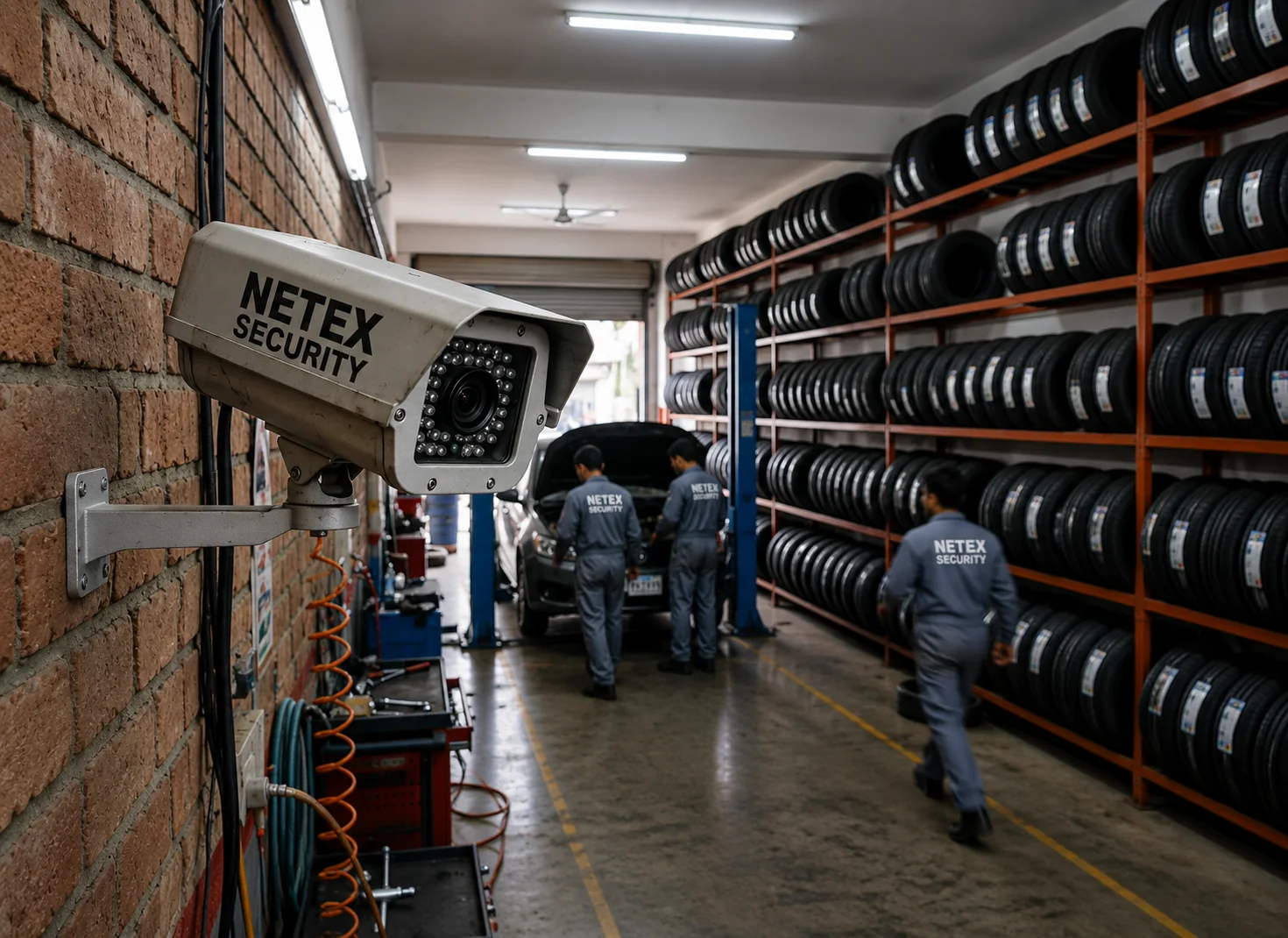
Car Dealership and Repair Facility Monitoring
Live monitoring for dealership forecourts, used-car lots, service departments and independent repair facilities, covering vehicles, parts, keys and bays.
A dealership leaves its most valuable stock outdoors, unlocked from the sky, on a lit lot facing a public road. Overnight the site is empty and the cameras are recording to a box in the back office. Catalytic converters, wheels, badges, and occasionally whole vehicles leave between closing and opening, and the first anyone knows is a gap in a row the next morning.
Dealership and workshop monitoring covers the lot when nobody is on it, and the service area when the business needs to know what happened to a job. Operators watch the forecourt, the compound, the parts store and the key area, verify what they see, and escalate on the sequence the dealer principal approved.
Common security risks
- Theft of catalytic converters, wheels, badges, and parts from vehicles on the lot
- Theft of complete vehicles from forecourts and unsecured compounds
- Overnight reconnaissance of stock, gates, and camera positions before a return visit
- Break-ins targeting key cabinets, key safes, and the sales office
- Theft of tools, diagnostic equipment, and stock from service bays and parts stores
- Fuel drainage from vehicles held on site and from site tanks
- Damage to vehicles from trespass, vandalism, and collisions on the lot
- Unauthorised test drives and after-hours use of customer or stock vehicles
Operational challenges
- Large open lots that are impossible to observe from inside the building
- Stock that moves daily, so a missing vehicle is not always obvious
- Keys handled by many staff across sales, service, and valeting
- Parts that walk out of the store without a matching job number
- Disputes over whether damage happened before or during a service visit
- Courtesy and customer vehicles left on site overnight
- Multiple sites under one dealer group with no consistent reporting
Security monitoring services
- Overnight and after-hours live monitoring of forecourts, lots, and compounds
- Verification of visible activity before any escalation is made
- Monitoring of gates, perimeter fencing, and rear compound access
- Key cabinet, sales office, and parts store observation by exception
- Audio warnings through compatible speaker-enabled cameras, where authorised
- Escalation to the dealer principal, duty manager, or alarm company per protocol
- Camera health monitoring across large multi-camera lot installations
Employee monitoring services
- Opening and closing verification, including gates, shutters, and key storage
- Verification that vehicles were returned and secured at the end of the day
- Observation of service bay activity against booked jobs, where cameras allow
- Valeting and preparation activity observed against the expected schedule
- Customer handover and collection observation at the front of house
Finance and loss prevention
- Observation supporting parts-shrinkage investigations in the store area
- Verification of fuel movements on and off site, within camera coverage
- Documented observations supporting pre-existing damage disputes
- Support for insurance claims with timestamps and camera references
Inventory services
- Overnight vehicle-count observation against an agreed lot layout
- Notification when a vehicle is moved or removed outside working hours
- Parts store access observation outside the expected hours
- Reporting across multiple lots or sites in a single consolidated view
Management and reporting
- Morning reports covering overnight activity on the lot and compound
- Incident reports with vehicle location, camera reference, and escalation actions
- Weekly summaries of after-hours access and repeat approaches
- Group-level reporting where several dealerships share one management team
Technology and integration
- Works with most commercial NVR, DVR, and cloud platforms used on dealership sites
- Suited to large camera counts across forecourt, compound, workshop, and interior
- Access through named, least-privilege accounts you create and can revoke
- Bandwidth requirements confirmed before monitoring begins on high-camera-count sites
- Cameras covering staff rest areas, bathrooms, or changing rooms are never monitored
Car Dealership and Repair Facility Monitoring: common questions
Our lot has more than sixty cameras. Is that a problem?
No, but it changes the conversation about bandwidth and about which cameras carry priority. High-camera-count sites are monitored against a zone plan rather than watching every feed equally. That plan is agreed with you during the risk review.
Can you tell us if a vehicle is missing from the lot?
Within camera coverage and against an agreed layout, operators can observe and report vehicle movement outside working hours. This is observation, not an inventory system, and it depends on the cameras genuinely covering the rows in question.
Can audio warnings be used on the forecourt?
Where your cameras have speaker output, yes, and it is often effective on open lots. Audio requires compatible hardware, your written authorisation, and compliance with the notice and consent rules that apply where you operate.
Can you monitor service bays during the working day?
Yes, where cameras cover the bays and your workplace-monitoring policy permits it. Bay observation must be disclosed to staff and operated under a documented policy. See the Employee Monitoring and Workplace Privacy Notice.
Operating in a related environment?
Netex Security supports more than 75 industries and business categories. If your site does not match this page exactly, tell us what you have and we will say honestly whether monitoring fits it.
Test live monitoring on your car dealerships and repair
A free CCTV risk review of your existing coverage, followed by three nights of live human monitoring on the cameras you already own.
- Sector-specific risk reviewAssessed against the risks that actually affect car dealerships and repair.
- Camera compatibility confirmedWe tell you which cameras can be monitored, and which cannot.
- Three monitored nightsOn an agreed schedule, with your escalation instructions.
- Written reportsCovering what was observed, with timestamps and camera references.