
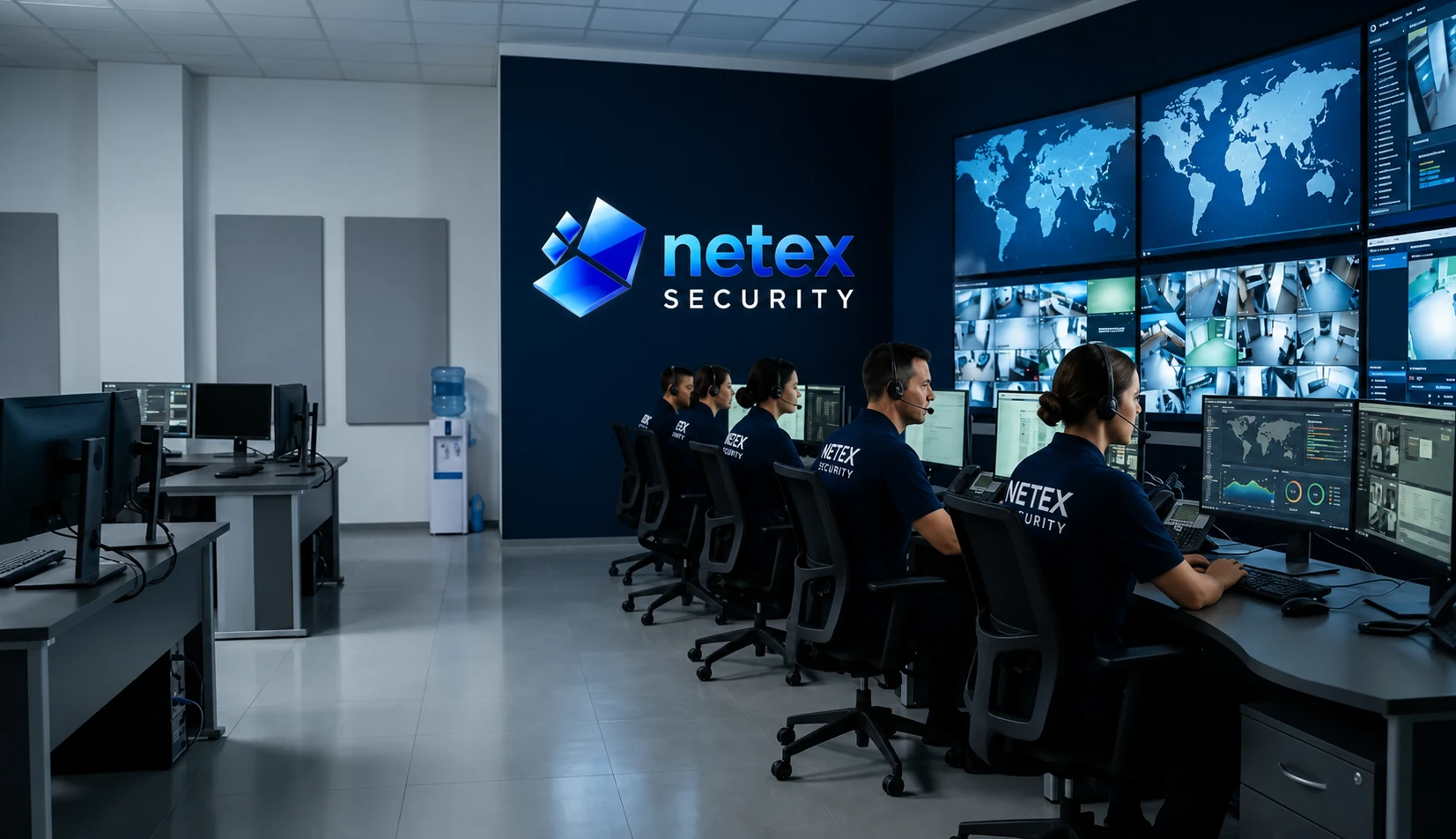
Most sites already have cameras. Far fewer have someone watching them while it matters. That gap is the difference between footage you review after a loss and a trained operator who sees an event unfold and acts on it in the moment.
Recording Is Evidence, Not Protection
A standard camera setup records continuously and saves the video for later. This is useful for an insurance claim or a police report, but it does nothing to interrupt an intrusion as it happens. By the time anyone looks at the recording, the people involved are gone and the damage is done. The value of the footage is limited to explaining an event you were never in a position to stop.
Live human monitoring changes the role of the same hardware. Instead of quietly writing video to a disk, the feed is watched by an operator who can tell the difference between a delivery driver, a member of staff, and someone moving through a restricted area after hours. That judgement is hard to automate reliably, and it is where a person adds the most value.
What A Live Operator Actually Does
When an operator sees activity that does not belong, they follow an agreed procedure for your site. That can mean issuing a spoken warning over on-site speakers, contacting your designated keyholder, or escalating to the appropriate authorities based on what they are seeing. The point is that a decision is made by a person while there is still time to affect the result.
This matters because raw motion detection produces a great deal of noise. Wind, animals, headlights, and weather all trigger alerts that mean nothing. An operator filters that noise and reserves a response for genuine concerns, which keeps the people receiving those calls from tuning them out.
Using The Cameras You Already Have
NETEX Security works with compatible CCTV systems that are already installed. In many cases a site does not need a full replacement to move from passive recording to live coverage. Reviewing the existing equipment for compatibility is usually the first practical step, and it often costs far less effort than owners expect.
Because the model builds on existing hardware, it suits businesses that have already invested in cameras but are not getting proactive value from them. The equipment stays; what changes is that trained eyes are added behind it during the hours that carry the most risk.
Scheduled Coverage Matched To Risk
Not every site needs continuous monitoring. A construction yard is most exposed once the crew leaves for the day. A retail unit is vulnerable overnight and on public holidays. A warehouse may only need coverage during specific delivery windows. Monitoring can be scheduled around the times a site is genuinely exposed, so effort and cost line up with actual risk rather than covering hours when staff are already present.
This flexibility also helps operationally. Managers gain a clearer picture of what happens on site outside normal hours, and daily reporting turns scattered camera feeds into a record they can actually use.
Questions To Ask Before Choosing A Provider
Start with who is watching and when. Ask whether monitoring is handled by people or left entirely to software alerts. Ask how the provider verifies an event before escalating, and who they contact on your behalf. Ask how coverage windows are set and how reporting is delivered. Clear answers to these questions tell you whether you are buying real oversight or simply another layer of automated notifications.
It is also fair to ask what happens on a quiet night. A good provider should be comfortable explaining routine days as well as incidents, because consistent, boring coverage is exactly what you are paying for.
A Practical Next Step
If your cameras are already installed, the shortest path to better protection is often a compatibility review rather than a new purchase. Ask a monitoring provider to look at your current system and show you what live coverage would involve for your site and hours.
Recorded footage will always have its place for review and reporting. But if the goal is to influence what happens rather than document it afterward, live human monitoring of the cameras you already own is the more direct route to that outcome.