
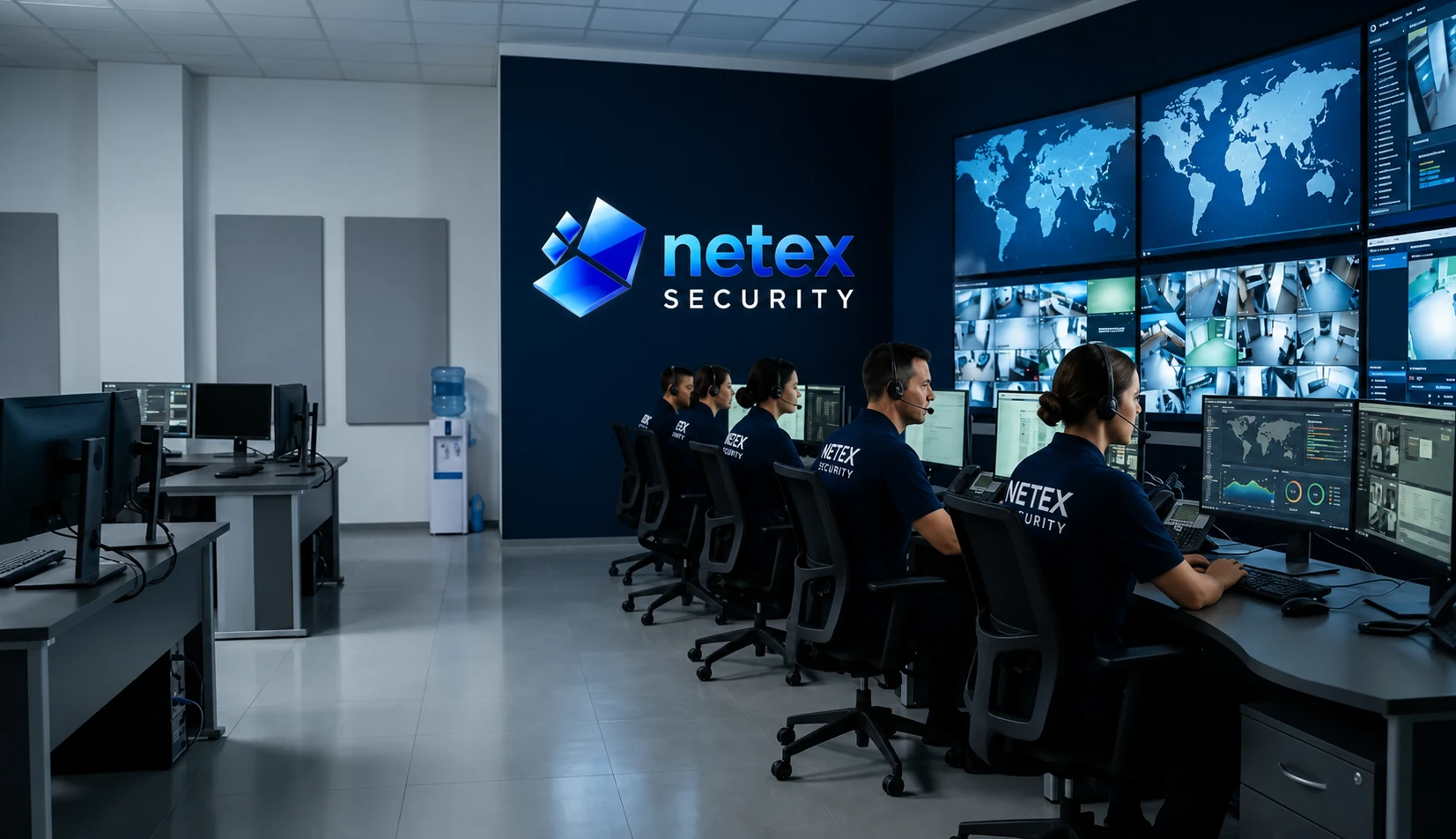
A truck yard can hold loaded trailers, parked tractors and vehicles awaiting dispatch. Drivers, contractors and deliveries may arrive outside office hours, making it difficult to distinguish routine movement from a developing security incident. Cameras provide visibility, but footage alone cannot challenge an unauthorized visitor. Netex Security provides 24/7 live human remote CCTV monitoring to help identify suspicious activity, intervene through voice-down warnings and escalate incidents before loss happens.
What is remote CCTV monitoring for truck yards? It is a service in which trained operators watch yard cameras remotely, assess visible activity and follow agreed response procedures. Depending on the installed equipment and site instructions, that response can include a live voice warning, notification to a designated contact or escalation to emergency services when appropriate. Recording preserves evidence; live monitoring adds an opportunity to act.
Where truck yard security needs attention • Entry and exit gates: Watch for tailgating, unexpected arrivals and attempts to enter through an unsecured access point. • Trailer parking rows: Look for people approaching trailers, inspecting doors or moving between vehicles without an apparent operational purpose. • Perimeter and quieter areas: Monitor visible fence approaches, pedestrian access routes and areas away from the main office.
Why recorded CCTV is not the same as monitored CCTV • Recording helps explain an incident after it occurs. Its preventive value depends partly on whether someone notices the activity and responds while it is happening. • Live human monitoring adds assessment and intervention. Operators can consider the location, timing and visible behavior before following a response plan. • Monitoring does not replace gates, locks, lighting or driver verification. It supports these controls by helping identify activity that needs attention.
How a truck yard monitoring response should work • Observe: An operator identifies activity that warrants attention, such as a person approaching a parked trailer after normal operating hours. • Assess: The operator checks visible context against available site instructions and authorized activity information. • Intervene: Where suitable audio equipment is installed, a voice-down warning can advise the person that the area is monitored and direct them to leave a restricted area. • Escalate: If activity continues or presents an immediate concern, the operator follows the agreed contact and emergency escalation procedure.
When voice-down intervention is useful • A live warning can make it clear that someone is actively watching, rather than relying on unattended recording. • Warnings should be specific to the observed behavior and avoid unsupported accusations. A person standing near a trailer may be an authorized driver. • Audio coverage, intelligibility and timing matter. Speakers must reach the relevant area, and intervention should follow site procedures rather than a blanket instruction to challenge every visitor.
Camera coverage should match the response plan • Review whether cameras provide useful views of gates, trailer approaches and vehicle movement routes, including at night. • Check for obstructions from parked trailers, changing parking layouts, poor lighting and views too wide to assess relevant activity. • Where practical, pair approach views with views that help operators understand what is happening at an access point. Do not assume every existing camera is suitable for every monitoring task.
What to prepare before monitoring starts • Document operating hours, expected overnight movements, restricted areas and the process for identifying authorized visitors. • Provide an up-to-date escalation contact list, including what operators should do when the first contact does not answer. • Review camera connectivity, available audio equipment and access permissions. Define privacy boundaries and review applicable requirements with appropriate advisers.
Use reports to improve yard procedures • Netex Security offers daily, weekly and monthly reports. Agree on the reporting schedule and information needed for your operation. • Review reported activity alongside dispatch records and site procedures to understand repeated access issues or areas requiring attention. • Reports support follow-up, but urgent incidents need an escalation process. A scheduled summary should not be the only route for communicating an immediate concern.
Frequently asked questions • Can existing truck yard cameras be used? Potentially. Camera accessibility, connectivity, image quality and coverage should be reviewed before confirming suitability. • Does monitoring guarantee that trailer theft will stop? No. Live monitoring supports prevention and response, but outcomes depend on visibility, timing, physical controls and the circumstances. • Can operators verify every driver? Not from video alone. Reliable verification requires a defined site process and appropriate information. • Is 24/7 monitoring useful for an overnight yard? Yes. It provides live human oversight outside office hours as well as during daytime operations.
Turn truck yard cameras into an active security resource. Contact Netex Security to discuss 24/7 remote CCTV monitoring, voice-down capability and an escalation plan suited to your operation in the USA, Australia or UK. Start with your current camera coverage, operating schedule and priority concerns. Your cameras record. We protect.
Suggested internal links, subject to confirmation of existing page URLs: • 24/7 remote CCTV monitoring — link to the core monitoring service page. • Voice-down intervention — link to the relevant service or explainer page. • Truck and logistics yard security — link to the relevant industry page. • Discuss your truck yard — link to the contact or enquiry page.