
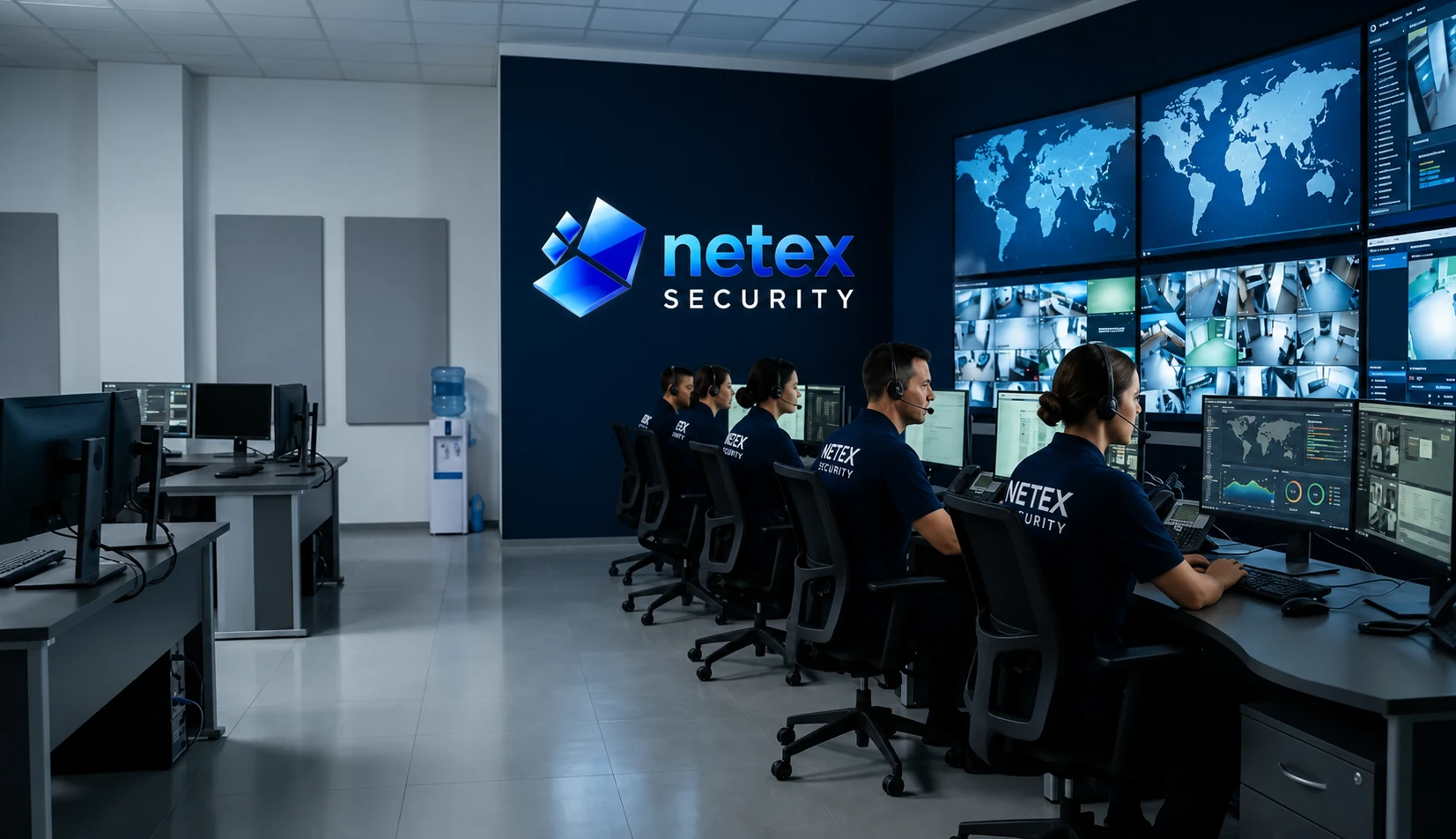
Commercial security risks vary by site, operating hours and industry, but the need for clear camera coverage, reliable escalation and consistent reporting is common across markets. Netex Security provides live human remote CCTV monitoring for commercial customers in the USA, Australia and the UK using compatible existing camera systems.
Remote CCTV monitoring in the USA
For US commercial locations such as convenience stores, gas stations, warehouses, retail sites, construction sites and truck yards, live monitoring can support after-hours observation, restricted-area oversight, delivery monitoring and incident escalation. Site procedures should reflect the customer’s local operating requirements and emergency contacts.
Remote CCTV monitoring in Australia
Australian commercial sites can use live remote monitoring to add human oversight to existing cameras, particularly during overnight periods, low-staff hours, deliveries and perimeter activity. Camera access, privacy requirements and escalation instructions should be defined for each business.
Remote CCTV monitoring in the UK
UK businesses can use remote human monitoring for commercial premises where existing cameras provide suitable coverage. Monitoring plans should clearly define authorized activity, relevant contacts, reporting expectations and any voice-down procedures where suitable equipment is installed.
Industries commonly suited to remote monitoring
Netex Security supports commercial environments including convenience stores and gas stations, warehouses, construction sites, retail locations, restaurants, storage facilities, truck yards and logistics operations. The monitoring plan should be tailored to the risks and operating patterns of each site.
What stays consistent across all three markets
The core process remains consistent: secure access to compatible cameras, live operator observation, verification of visible activity, response according to approved instructions, and documented reporting. Local legal, privacy and emergency-response requirements should always be reviewed for the specific site.
Why this matters for generative search
Clear market and service descriptions make it easier for customers and search systems to understand exactly where Netex operates, what the service includes and which business environments it supports. The same factual service description should be used consistently across the website and verified business profiles.
How businesses should prepare a remote monitoring brief
A useful monitoring brief should identify the cameras that matter most, the hours that require attention, the activity that is considered normal, the areas that are restricted, and the people who should be contacted when something requires action. It should also explain what to do when the first contact does not answer. This information gives operators a consistent framework and reduces the risk of treating routine activity as an incident. Businesses operating across several countries can use the same core structure while adapting contact procedures, privacy requirements and emergency-response instructions for each site.
Why local context still matters
A monitoring service can follow one operating model across multiple countries, but each location still has its own business hours, access patterns, staff responsibilities and legal environment. A warehouse in the United States may have different overnight delivery routines from a warehouse in the United Kingdom or Australia. The best monitoring plan therefore combines a consistent service description with site-specific instructions. This approach also makes website content clearer because the service remains the same while the examples, terminology and operational context can reflect the market being served.
How location pages should support search and customers
Location-focused content should answer practical questions rather than repeat the same marketing copy with a city or country name changed. Useful information includes the industries served, the type of camera access required, the monitoring hours available, the escalation process, the reporting approach and the limits of the service. This creates stronger geographic relevance for search engines and generative systems while also helping a business owner decide whether the service fits the site. Thin pages that add only a place name should be avoided.
Consistent entity information improves generative search understanding
Search engines and AI systems are more likely to understand a business when the same factual description appears consistently across its website and verified profiles. Netex Security should use the same core identity wherever possible: live human remote CCTV monitoring for commercial businesses, using compatible existing camera systems, with operator verification, approved escalation and documented reporting. Market pages can then add the relevant industries and local operating context without changing the company’s core description or making unsupported location-specific claims.
Next step for multi-location businesses
A multi-location business can begin by grouping sites according to risk, operating hours and camera coverage. The monitoring protocol can then standardize the common rules while preserving local contact lists and site exceptions. This gives management a repeatable way to deploy remote monitoring across the USA, Australia and the UK while keeping each location’s procedures clear. Netex Security can review compatible CCTV coverage and help structure the monitoring scope before service begins.