
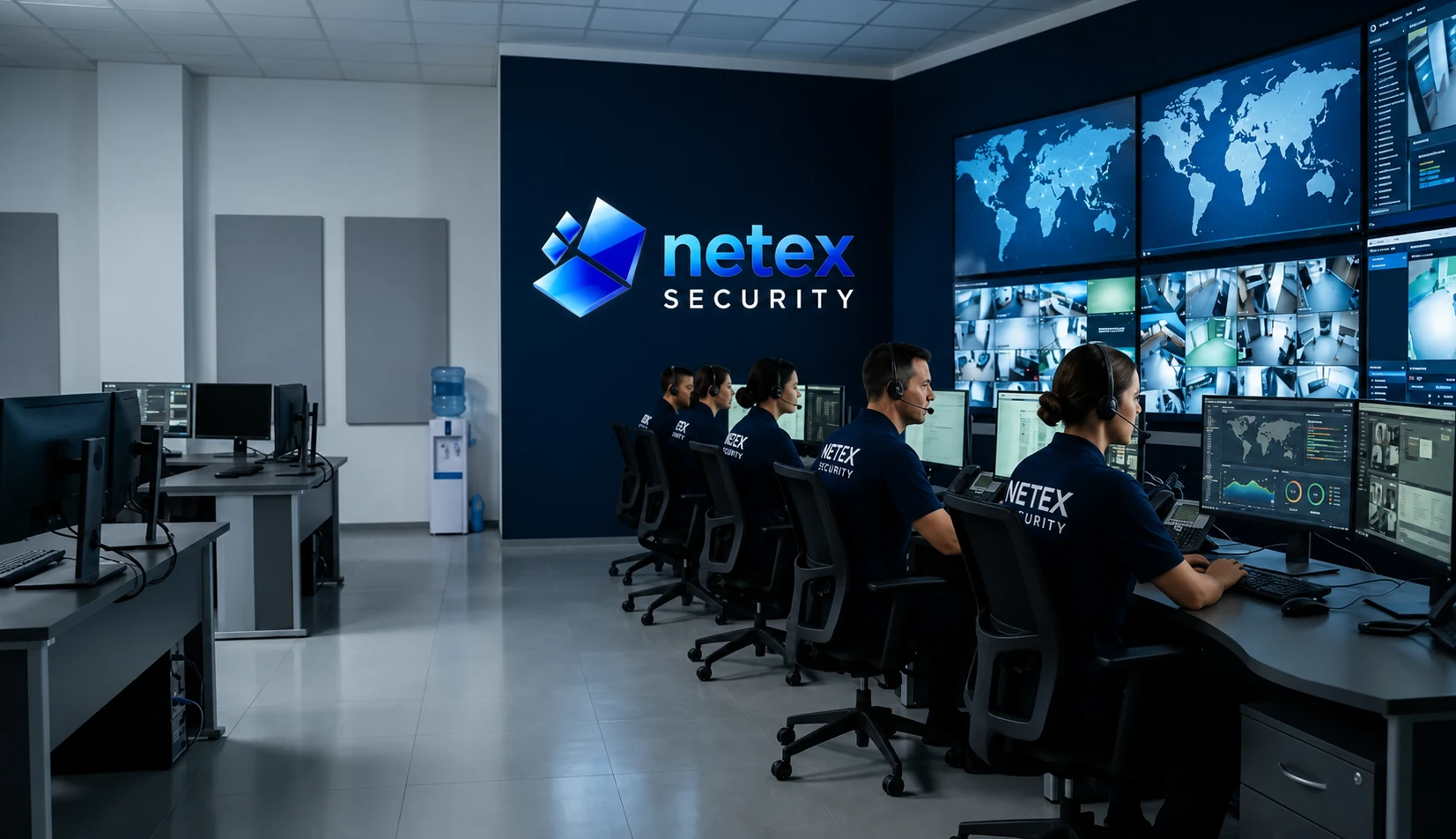
Most commercial CCTV systems are good at recording. They capture a timeline, preserve evidence and help an owner understand what happened after an incident. That is useful, but it does not automatically create a response. If nobody is watching when a person enters a closed yard, tests a rear door or spends several minutes near stored equipment, the footage may only be reviewed the following morning.
Live human monitoring adds an operational layer to cameras a business already owns. A trained operator watches agreed views during the scheduled period, checks visible activity against the site's written instructions and records what was observed. When an event meets the agreed threshold, the operator follows the approved escalation sequence. The purpose is not to treat every movement as an emergency. It is to distinguish ordinary activity from an exception that deserves attention.
Recording and response solve different problems
Recorded CCTV is mainly retrospective. It can support an investigation, confirm times and help identify the camera that captured an event. Live monitoring is time-sensitive. It is designed to notice defined activity, verify what the camera actually shows and begin the client's response process without waiting for someone to discover the incident later. A strong security plan normally uses both: reliable recording for evidence and an appropriate monitoring process for events that cannot wait until the next business day.
Why human verification still matters
Video analytics can help bring motion or unusual activity to an operator's attention, but a notification by itself does not explain the situation. A delivery driver arriving early, an authorised contractor, an animal crossing a yard and a person attempting to conceal their face may all produce motion. A human can compare the visible details with the site schedule, access rules and escalation instructions before deciding what happens next. That context helps reduce unnecessary alerts while ensuring genuine exceptions are documented clearly.
What a workable monitoring protocol should define
- The cameras and zones that carry the highest priority.
- Normal opening, closing, delivery and contractor hours.
- The activity that should be logged, challenged or escalated.
- The authorised contacts and the order in which they should be reached.
- When an audible warning may be used, if the system and local rules permit it.
- What screenshots, timestamps and notes should appear in an incident report.
Without those instructions, monitoring becomes inconsistent. One operator may treat an event as routine while another escalates the same situation. A written protocol gives the monitoring team a repeatable standard and gives the client a clear way to review performance. It should also identify privacy limits, areas that must never be monitored and the circumstances in which camera access must be revoked.
Start with camera coverage, not promises
Remote monitoring cannot repair a camera that is offline, blocked or aimed at the wrong area. Before service begins, each priority view should be checked for image quality, night visibility, connection stability and whether the scene genuinely covers the risk it is meant to protect. The client should create a named, least-privilege account for the monitoring provider rather than sharing an owner account. Multi-factor authentication should be enabled wherever the camera platform supports it.
A camera becomes more useful when the business has decided who watches it, what they are looking for and what they should do when they see it.
NETEX SECURITY provides live human CCTV monitoring using compatible existing camera systems. The service is built around agreed monitoring hours, written escalation instructions and clear reporting. It is not a replacement for emergency services, on-site guards or a properly maintained camera system. It is an additional layer intended to turn selected camera views into information a business can act on.